How a service visit actually runs
Confirmed ahead, worked after close, documented before we leave.
Most of the frustration with exhaust vendors is not about cleaning quality. It is about not knowing when someone is coming, not receiving the paperwork, and having to chase both. This page sets out exactly how we run it.
Six steps, every time
The same sequence whether it is one restaurant hood or a district of sixty buildings.
We look at the system
Before anything is quoted, we look at what is actually there: hood count and length, appliance mix, duct configuration and access, fan count and roof access. Estimates are free, anywhere in our service area.
Frequency and scope in writing
The inspection frequency is set against NFPA 96 Table 12.4 for your cooking volume, and the scope and price are quoted in writing. Repairs are quoted as one price for each item, with the deficiency and the correction described.
Scheduling and confirmation
Visits are confirmed ahead of time. Scheduling communication is systematic, and reminders come from us. No chasing us down.
The service visit
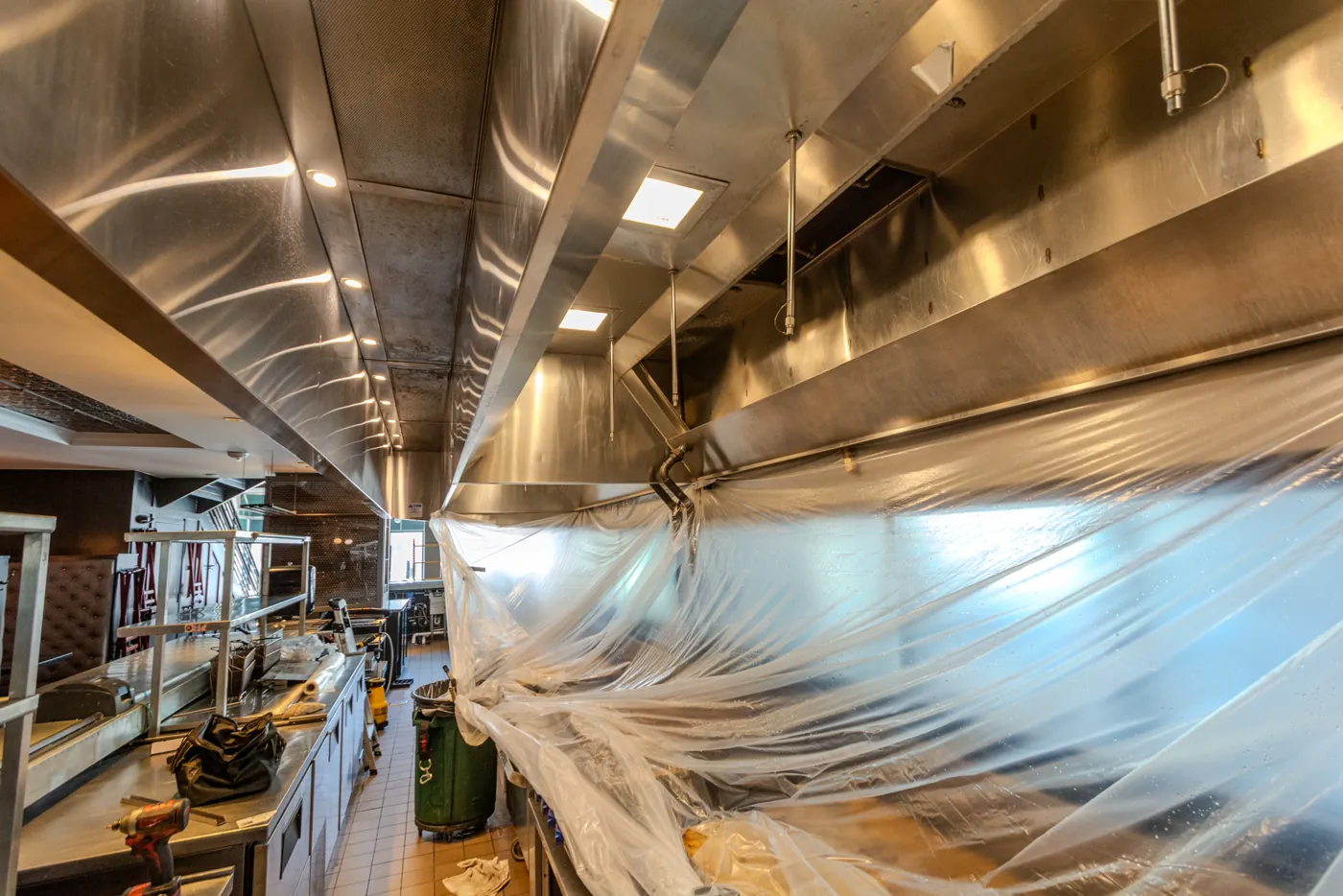
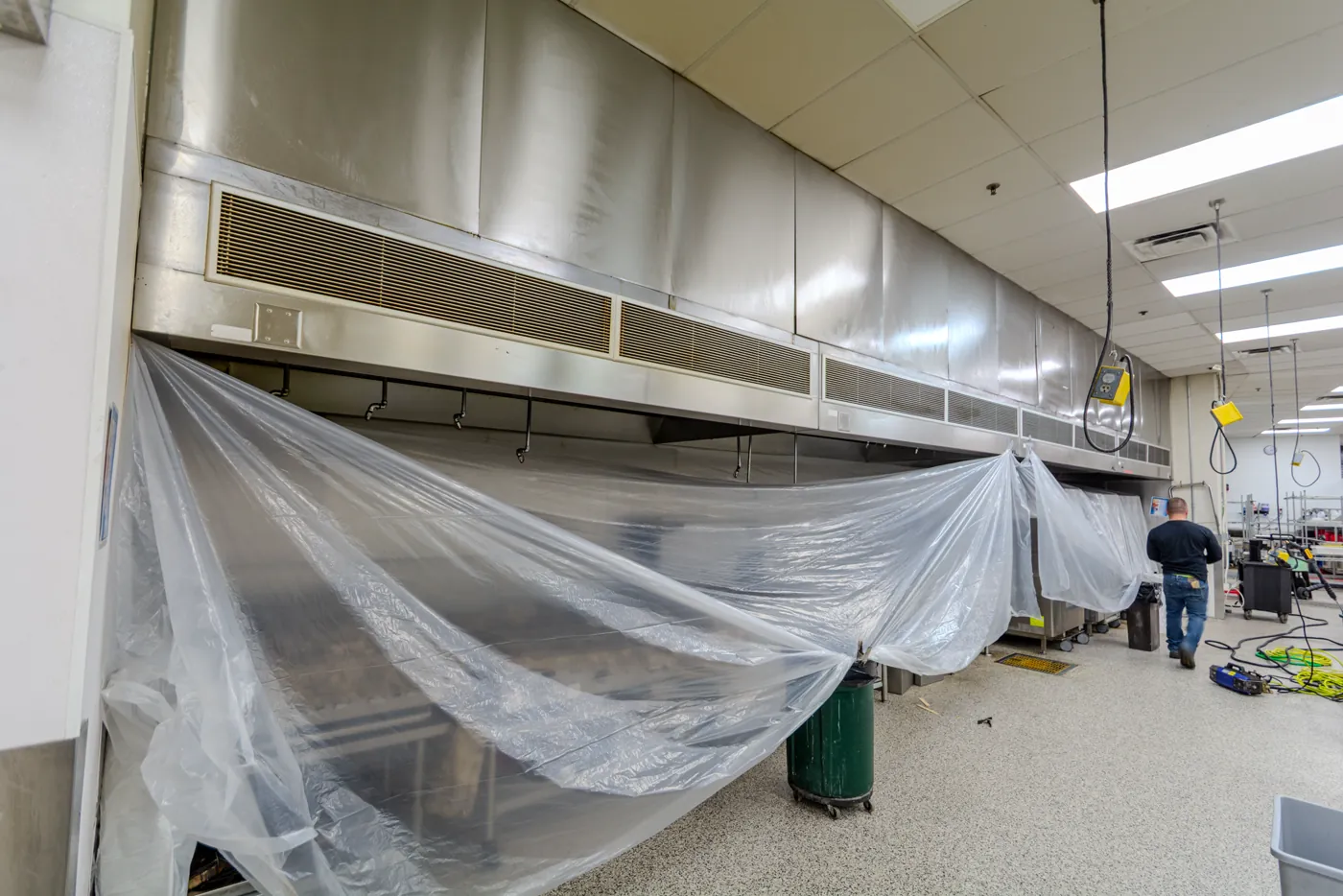
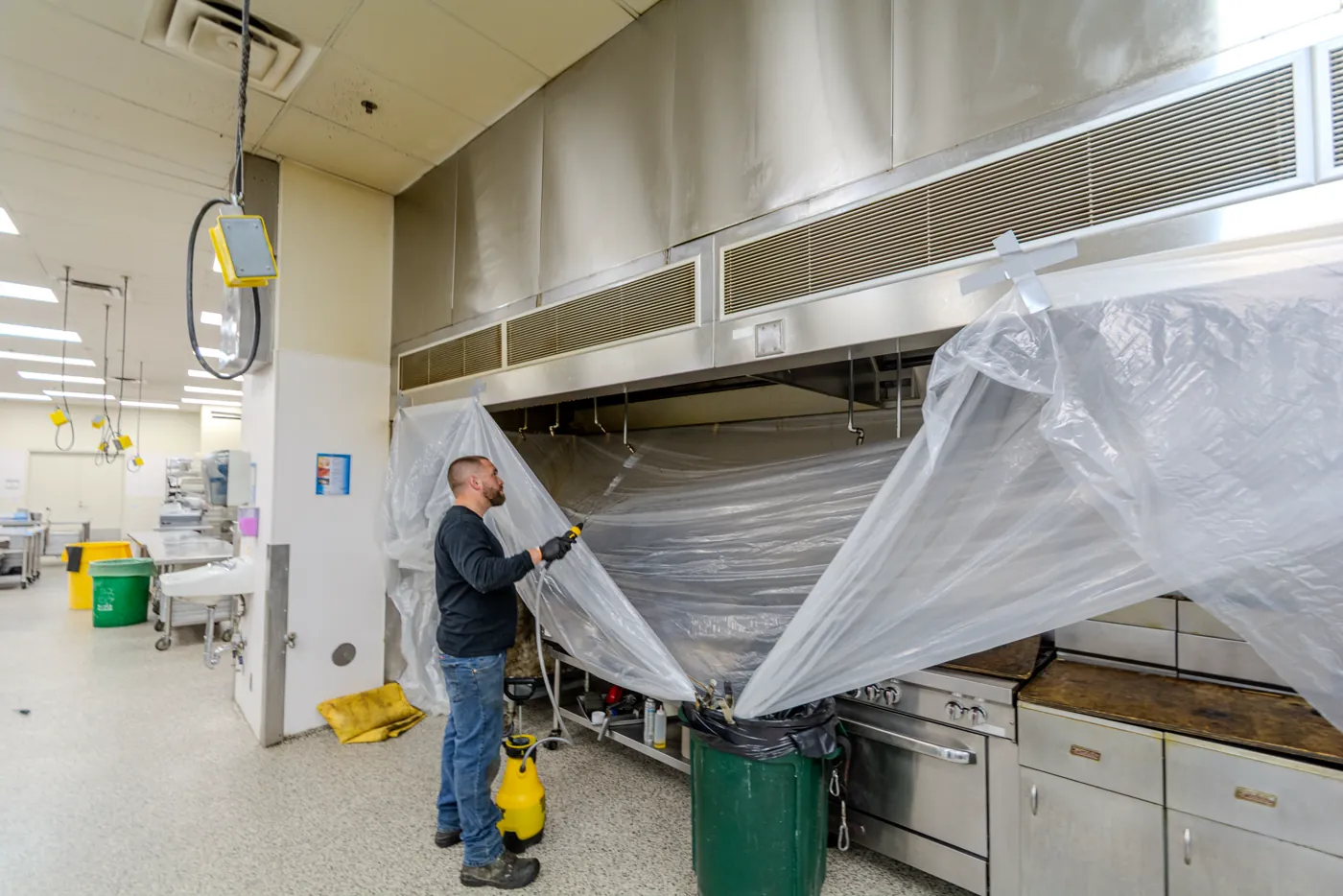
Work is routinely performed after close of operations. Kitchen equipment and cooking surfaces are protected, and impacted areas get a post-cleaning wipe-down and polish. The kitchen is left ready for morning service.
Documentation, before we go
Photographs, the written service report, and the compliance sticker on the hood. Anything we found is described and photographed, with quotes for corrective work to follow.
Records kept and retrievable
Service records are maintained per customer in organized digital files: reports, visit history, and documentation, retrievable on request for an audit, an insurance review, or the fire marshal.
What that actually looks like
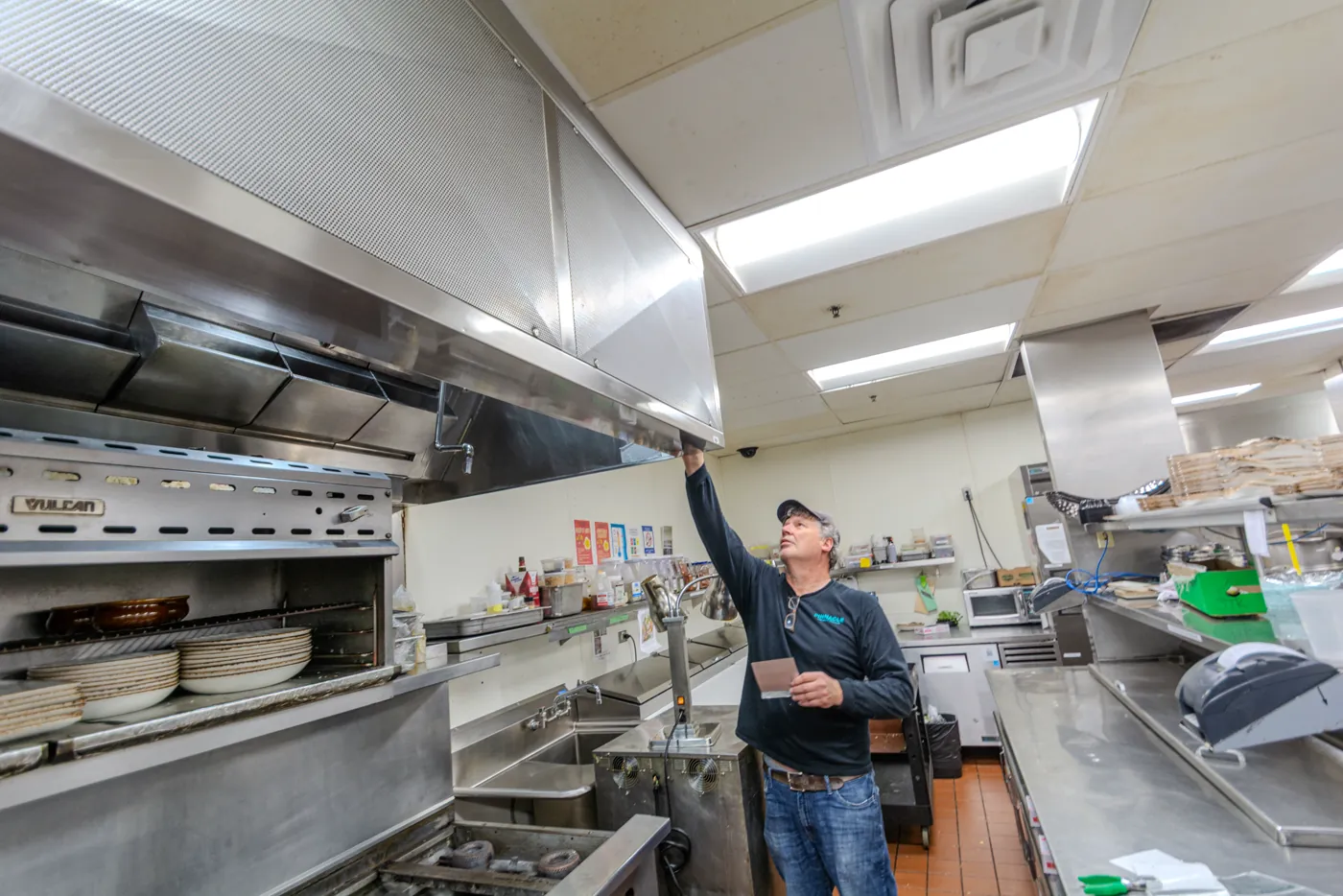
Photographed on our own jobs, in the order they happen. The kitchens are real and the crew is ours. The containment in these frames is the reason the kitchen is usable in the morning.
Exactly what you receive
This is the list from our proposals, unchanged. If something on it does not arrive, we have not finished.
Before and after photo documentation
Of all work areas, showing the actual system we serviced.
Service report
Summarizing work performed, crew details, and any observations, delivered as a polished PDF suitable for a compliance file.
NFPA 96 compliance sticker
Applied to the hood system with the date of service and the next required service date.
Notes on system conditions
Excessive grease buildup or items of concern observed during service, described plainly.
The report also records anything that could not be completed and why. That candor is deliberate: a report that quietly omits an unreachable section is worse than useless to you, because it reads as complete when it is not.
No chasing us down
Confirmations go out ahead of scheduled service, reminders are handled on our side, and your schedule and reports are available to view online rather than living in someone's inbox.
If you are managing several vendors, this is the part that should not need managing. The cleaning is expected; not having to chase us for it is the difference.
What we need from you
Short list, and none of it is a surprise on the night.
- Kitchen systems must be shut down and cooled prior to service, which is why the work happens after close.
- Someone who can grant access to the roof, and to any area of the kitchen the crew needs to reach.
- Any inspection findings or prior service reports you have, which help us scope accurately.
Documented, then quoted, then verified
During routine cleaning we identify equipment deficiencies that should be corrected to maintain a compliant, safe, and serviceable exhaust system: a duct run without access, a fan with no hinge kit, a damaged grease tray. Each is photographed and described, with the recommended correction stated.
Reports separate work we are qualified and able to perform from work that should be completed by a licensed electrician, mechanical contractor, or other trade you designate. Once repairs are complete, we can return to verify the affected systems are fully serviceable and compliant.
Ready to see the system?
Estimates are free, anywhere in our service area. Tell us about the kitchen and we will come look at it.